Cellulose Nitrate
Gunpowder's cousin — a combustion accelerator in cigarette paper.
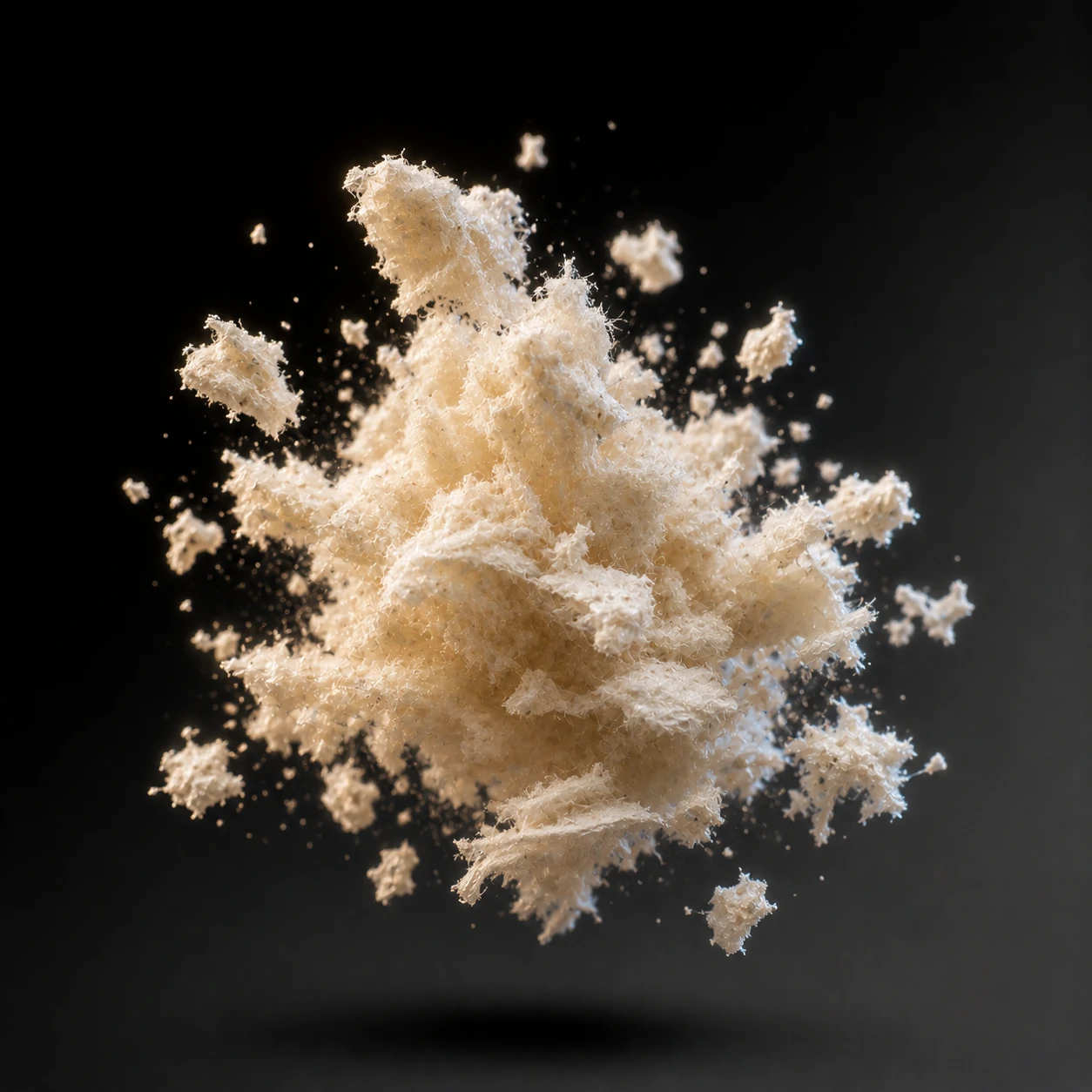
At a glance
- Also known as
- Schießbaumwolle · Nitrocellulose
- CAS number
- 9004-70-0
- Toxicity
Medium
- Carcinogenic
- Not classified for cancer
- In cigarette smoke
- nicht freigesetzt — wird vollständig verbrannt, Produkte: NOx, CO, Aldehyde
What is Cellulose Nitrate?
Cellulose nitrate (nitrocellulose, guncotton) is nitrated cellulose and one of the first industrial explosives — used by Alfred Nobel and others from the 1840s to modernise gunpowder technology. In moderate amounts, nitrocellulose is incorporated into cigarette paper to ensure even combustion.
Why is Cellulose Nitrate in cigarettes?
Pure cigarette paper burns too fast and unevenly — the ember would either extinguish between puffs or burn uncontrollably onward. By incorporating small amounts of nitrocellulose and other combustion accelerants, the burn rate is tuned so the glow stays stable between puffs. This steady ember is part of what makes cigarettes such fire-friendly objects — and one reason for fatal bed fires.
What Cellulose Nitrate does to your body — short term
Cellulose nitrate itself is fully decomposed during smoking into smaller combustion products — the substance doesn't reach the lung as such. Acute effects come from the pyrolysis products: nitrogen oxides, carbon monoxide, aldehydes — treated separately in our other entries. The actual acute risk of cellulose nitrate in the cigarette context isn't inhalation, but fire.
What Cellulose Nitrate does long term
Cellulose nitrate contributes indirectly to long-term damage by stabilising combustion and enabling and maximising the formation of the actual toxins (tar, PAHs, NOx). Without combustion accelerants, cigarettes would smoulder irregularly and deliver a lower constant toxin output. This technical optimisation is part of what makes cigarettes the most efficient toxin-inhalation device.
Where else do you know Cellulose Nitrate from?
Cellulose nitrate has a notable technical history: it was the main component of early cinema film stock (until the 1950s) — and responsible, due to its flammability, for several catastrophic cinema projection-room fires. Today it's the raw material for smokeless gunpowder, model-building glue, nail polishes and some industrial coatings.
How it compares
There's no separate inhalation workplace limit for cellulose nitrate itself — the combustion products (nitrogen oxides, CO, aldehydes) are regulated separately. The function of cellulose nitrate in the tobacco context isn't directly toxic, it's technical — optimising the cigarette's toxin output.
Workplace exposure limit: kein eigener Grenzwert (Verbrennungsprodukte separat reguliert)
Related substances
These substances you want out of your body.
Flamy walks you through quitting, step by step.
Download the Flamy app